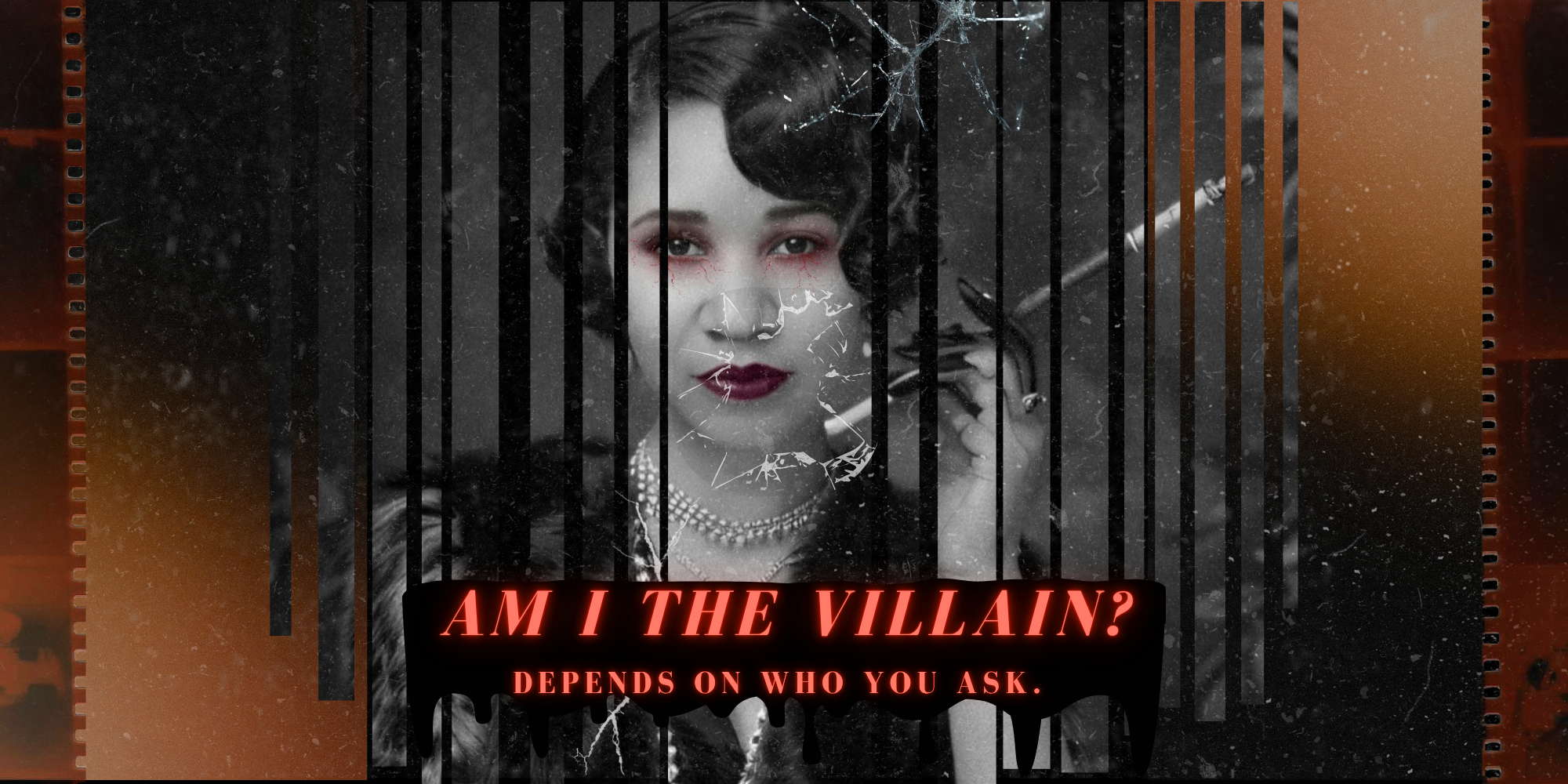
Am I The Villain
I’m on my way to work and want to unpack something that’s been on my mind. This post is for anyone who has ever questioned whether they might be the villain. Not because they’ve acted cruelly, but because their journey toward peace and happiness seems to disturb others. When you start setting boundaries and changing your patterns, it’s all too easy to feel the guilt of someone else’s discomfort weighing on your shoulders.
Early-Days
My self-awareness began to unfold gradually as I started my healing journey. I learned that becoming who I wanted to be required shedding identities I never chose, but adopted for survival.
I grew up as the youngest child in a single-parent household, with significantly older siblings. One was rebellious and somewhat distant, while the other was more responsible and often had to take care of me, which led to some resentment. My exhausted mother was doing her best given the circumstances. In this environment, I quickly learned to adapt, and pleasing others became a survival strategy.
Chameleon
I learned to read my environment and discovered that being helpful and agreeable earned me approval, which in turn helped me avoid conflict. My siblings and I are all very different, and I am the least like them, which led me to downplay those aspects of myself to gain acceptance.
As an adult, I continued to carry these patterns with me. This made it easy for others to take advantage of my kindness, resulting in relationships where I gave more than I received. Consequently, respect, acceptance, and love often felt conditional.
The Shift
Eventually, I reached a soul level exhaustion. I started to question not others but myself. At some point, I realized that the “peace” I tried to maintain came at the cost of my own happiness. Especially when I had nothing to show for my sacrifice.
Self-awareness begins when you realize, “This isn’t working anymore,” and shift from seeking approval to self-love and acceptance. From there, you start setting boundaries, not out of anger, but from a renewed commitment to living authentically.
If you want more context on how my self-awareness journey began, you can read my origin story here:
Origin — Have We Peeked?
Big Picture
In most situations, there are complex dynamics and undercurrents, and everyone is struggling in their own way. People play the roles they need to play to survive. There is no benefit in pointing fingers.
Instead, healing often requires an understanding of how specific environmental conditions shape people’s behaviors, coping strategies, and how they present themselves in life. It’s about having empathy for the different individuals in that environment, while staying aware and emotionally mature enough to navigate the emotional ecosystem without romanticizing, dramatizing, or demonizing it.
The Divide
Sometimes, the environments we grow up in — or the voids we carry — inevitably draw us toward certain types of people or interactions. Even as we try to rewrite our stories, we can still end up in dynamics that mirror the ones we’re trying to heal from. With that being said, not everyone is in a position to reflect on their behavior. Some people move through life believing they’re the victim in every situation, never asking what part they played in the outcome of their interactions.
Pressure Point
Something shifts when you stop looking outside yourself for validation and begin trusting your own approval. When you choose to act in ways that align with your values, not someone else’s expectations, you create a kind of peace that doesn’t depend on anyone else.
Change disrupts systems — even emotional ones. People who are used to you bending, shrinking, or saying “it’s fine” have to adjust when you no longer do that.
You become the mirror. Your boundaries highlight where theirs never existed. Your calm makes their chaos louder. Your healing reminds them of their avoidance. Some people aren’t ready to face that reflection. So instead of self-awareness, they choose projection. You become “the problem”.
Jolt
When you change your rhythm — when you no longer play the role expected of you in their familiar dance — those around you may feel unsteady. They might react by lashing out, guilt-tripping you, or withdrawing from you. It’s easier for them to say that you’ve changed than to acknowledge that they’ve stopped growing.
Because they are accustomed to you being accommodating, any attempt you make to regain control of your energy and time can feel threatening to them.
Boundaries are powerful, and to those who have benefited from your lack of them, establishing boundaries can feel like a betrayal.
Villain Era
It’s OK to be “the villain” in someone else’s unhealed story. Being labeled “the villain” in their narrative might simply mean that you have finally stopped being the victim in yours.
It’s OK to disappoint those with unrealistic expectations. It’s OK to say no to emotional monopolies.
You begin to manage expectations—not out of cynicism, but out of clarity. Instead of expecting others to meet you where you are, you learn to meet yourself fully. You are not required to keep explaining your worth to people who are committed to misunderstanding you. Yes, it hurts. When you stop performing for love and stop over-giving to earn acceptance, an initial emptiness may follow as you destroy that codependency. That emptiness can feel heavy, but it is space for healing, space for those who see you without needing you to shrink.
Unbinding Devotion
The hardest part is realizing that you can love and care about these people while still maintaining a distance from them. Be compassionate without becoming overwhelmed. Understand someone’s pain without feeling responsible for fixing it.
You can continue to love these individuals, but do it from a distance. If physical distance isn’t possible, establish emotional boundaries. Accept that they may never become the person you hoped they would be, and manage your expectations accordingly.
Self-Sovereignty
Protect your joy. Stop sharing your achievements and dreams with those who cannot celebrate them with you. Find comfort in your own company and recognize that this is a form of peace, not isolation.
Don’t seek depth from people who have not developed it within themselves. Avoid sharing your heart with those who see it as a burden. Seek out a community where mutual care exists—one where love isn’t transactional or conditional.
The Reflection
This is still something I’m learning, even now. I still catch myself wondering: Did I do too much? Was I too honest? Too firm? Too distant?
But then I remember — I’m healing patterns that took a good portion of my lifetime to form. It’s supposed to feel uncomfortable. Growth always does.
So now I’ll ask you:
- In what ways have you been made to feel like the villain?
- How do you navigate the pain of realizing that someone you love can’t meet you where you are on your healing journey?
- What helps you stay grounded and committed to your healing when the process feels isolating or lonely?
- Are you someone who has walked through this kind of inner transformation — and if so, what did you discover about yourself on the other side?
We’re all learning.
And maybe — just maybe — being “the villain” is how you finally become the hero of your own story.