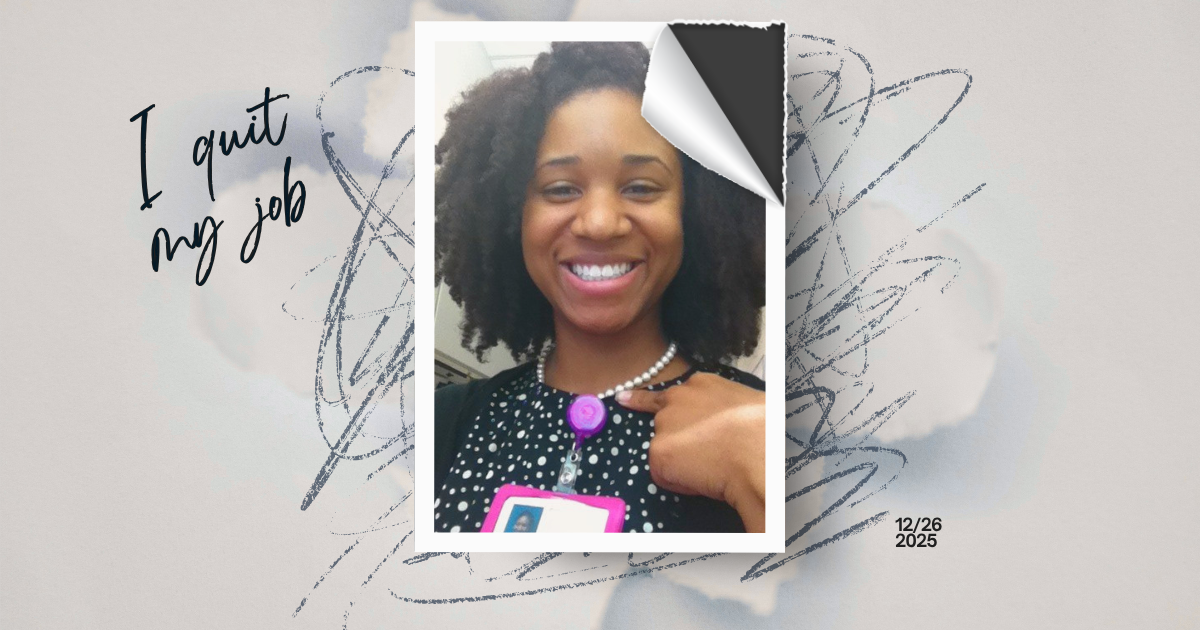
Why I’m Leaving My Job After 21 Years—and Why I’m at Peace With It
In just a few days, I’ll walk away from the company I’ve worked at for 21 years.
I didn’t come to this decision overnight. I’ve drawn lines in the sand so many times over the years—“after I finish school,” “after this restructure,” “after I find the perfect role to transition to.” Each time, the line would blur, then move. I’d find a new way to rationalize staying.
But eventually, something in me stopped negotiating. My spirit, my intuition, and even my body started saying the same thing:
You cannot do another year of this.
So I listened.
How It All Began (and Why It Made Sense at the Time)
I’ve always been drawn to creative endeavors—writing, drawing, crafting, any space where I had freedom and autonomy to express myself. But that’s not what I was told was “realistic.”
Like many people, I chose a more traditional path because it made sense on paper and aligned with what I saw around me. It was familiar. It was stable. It paid more than the job I had at the time. So I took it.
The very first day, I remember walking into the department—no windows, fluorescent lights, chaos—and feeling like I’d been caged. I could see the front door from my work area, yet I still felt trapped. That was my first clue that this wasn’t the place for me.
But the money grew, and with it, my idea of the perfect lifestyle—and the pressure to maintain it. I was a young adult trying to support myself: paying for school out of pocket, covering rent, a car note, and all the costs of adulting. I didn’t have proper financial guidance. I dug myself into debt chasing a sense of freedom and stability I never actually got.
So I stayed.
Following the “Right” Path for the Wrong Reasons
Early on, I tried to fix my dissatisfaction by stacking credentials. Based on what I saw around me, I believed that more education, experience, and the “right” connections were the price of the freedom and success I envisioned—so I planned my life around that assumption.
I worked full-time while completing my undergraduate degree, then applied for new roles and ultimately transitioned into a different department—only to realize the job I thought I wanted wasn’t for me. It turned out to be the same problems, just in a different setting.
Still, I kept going—redirecting myself toward the next “best” option and telling myself that once I made a decision and finished the required steps, things would get better.
They didn’t.
I explored multiple academic paths across different universities, all chosen strategically rather than emotionally. Each decision made sense on paper: it paired well with my undergraduate degree, felt marketable, and mirrored what others around me were doing. But very little of it came from genuine interest or passion.
Over time, I realized I wanted the option to step away from healthcare entirely. I chose an MBA because it felt neutral yet expansive—something that could open doors across multiple fields.
What surprised me most was how meaningful the experience became. For the first time, I was challenged to think like a leader—not just for a company, but for myself. What kind of leader did I want to be? What values mattered to me in building a business? What kind of impact did I want my work to have?
I finished the program with a sense of possibility, believing it would lead to something bigger.
Now doors will open.
They didn’t—at least, not in the way I imagined.
That said, I’m still genuinely grateful for the opportunity to study and earn my degrees. I wouldn’t trade the experience. It was eye-opening and useful in ways I didn’t expect—just not in the traditional sense I was taught to measure success by.
Just a Formality: The Illusion of Opportunity
My company is one of those places where advancement is less about what you know and more about who you know.
I tried to get in through internships. During my undergraduate years, I completed a compliance internship at the same organization, before an official internship program even existed—all while juggling full-time work and school. I believed it might be my bridge into a new role.
It wasn’t.
After a rigorous interview process—multiple interviews with the manager, the team, and the department chief, along with assessments and presentations—I later learned that there had already been “someone selected” before the process even began. I had a similar experience after completing my master’s program.
I used every internal resource available to me:
- Career development programs to review my résumé
- Coaching sessions
- Networking
I applied for job after job after job.
I volunteered for projects.
Nothing.
Throughout all of this, the role—and the department—was restructured repeatedly.
Each restructure came with:
- New responsibilities
- More pressure
- More “testing” to prove we deserved to keep our roles
- And sometimes, more money, which brought more problems and repeated attempts to claw that money back
They downsized. They laid people off. Then they brought people back. They changed the title, scope, and expectations—over and over again.
Meanwhile, I kept working. I kept learning. I kept doing more.
Unsupported: When Praise Doesn’t Lead Anywhere
Over 21 years, I worked under several managers, across multiple locations, with different teams and assignments. They trusted me, put me on special projects, and described me as high-functioning, resourceful, and reliable.
I became the person my peers went to when they needed help, and the person managers requested for assignments.
But here’s what never happened:
No one sponsored me.
No one said, “You’d be great in this role—let me recommend you.”
No one backed me to help me move forward.
What bothered me most was the contradiction. Leadership urged us to keep learning, to take on new projects, and to use the resources they provided. But when we applied for roles that would actually use the skills and knowledge we’d worked so hard to gain, nothing happened. The promised support just wasn’t there, and our efforts seemed to hit a wall.
If development is encouraged, why isn’t advancement supported?
That disconnect—being praised, relied upon, and still unsupported—became one of the final straws.
A System That Didn’t Care
While all of this was happening, I was also watching patterns that didn’t sit right with me:
- Individuals getting roles they weren’t qualified for on paper, simply because they knew the right people.
- Colleagues who were burning out and getting sick were only pushed further.
- Decisions that clearly prioritized numbers over people, both employees and patients/consumers.
As both a consumer and an employee, it started to bother me deeply.
What the company said publicly didn’t match what I saw behind the scenes.
I no longer believed in the message.
I didn’t believe they truly cared for the people they served.
I didn’t feel cared for in any capacity.
I felt depressed, stifled, and spiritually drained. There were days driving home when I would cry in the car and record voice notes just to release everything I was holding. I was exhausted in all areas of life—work, personal life, family, and finances.
All my walls were closing in at once.
Numbness Before the Line in the Sand
After a while, I became numb.
Happiness—along with other emotions—became unfamiliar. I stopped feeling much of anything. I moved through my days on autopilot: sleep, wake up, work, repeat. After work and on the weekends, I would isolate and numb out. I was so overstimulated and depleted that doing nothing was all I had the energy for. Every hour outside of work was spent recovering just enough to go back again.
Eventually, I reached a point where I couldn’t keep quietly enduring.
When the company attempted yet another restructure of my role, something in me shifted. I remember thinking:
I am not fighting you for this anymore.
Around that time, I started hoping they would offer severance packages. It felt like the only “acceptable” way out—just enough breathing room to reset before taking on whatever came next.
The severance package never came.
So I drew a line in the sand again. I put a hard deadline in my calendar: December 31st, 2025. I would not work there another year.
And as that date got closer, I knew I couldn’t move it anymore. If I pushed it out again, I’d still be there five years from now, more broken than I already felt.
So I did it.
I turned in my resignation on November 26th, 2025.
Leaping Without a Net… Intentionally
I didn’t leave with another job lined up.
In an ideal world, the advice is clear:
- Have a new role secured.
- Have several months of savings stacked.
- Have everything planned out and secured.
That wasn’t my reality—and I don’t see it as unfortunate. I see it as space. Space to decompress and refocus.
What I do have is clarity and resolve. I’m open to new challenges, new experiences, and roles that don’t follow a traditional script. I’m not attached to titles or linear paths—only to work that offers freedom, flexibility, and room to grow. Roles that supplement and support the larger vision I’m building are welcome, even if they don’t look ideal on paper.
I’m also finally committing to my business with intention—being strategic without sacrificing authenticity. More importantly, I’m clear about what I’m committing to: my purpose, how I want to show up in the world, and what I have to offer.
I’m entering this chapter with a different relationship to money as well—working with a financial advisor, being intentional with my resources, and reducing expenses that don’t support the autonomy or life I’m intentionally building.
The Power of Intentional Silence
When you make a big decision like this, who you tell matters.
I didn’t run to my family with the idea the moment it crossed my mind. I know my family, and I know the system I was raised in. Their approach is more traditional, more cautious. What I’m doing may look risky or irrational to most.
Before I told them, I:
- Sat with the decision privately for a long time.
- Let myself feel the fear, excitement, and grief.
- Built a plan, as realistic as possible, for my situation.
- Got support from a small circle of friends who know me deeply and don’t project their fears onto my choices.
I sat with it long enough to gain the confidence and resolve I needed to move forward. When I did tell my family, it wasn’t in a “Should I do this?” way.
It was:
“This is happening. I’ve thought this through. I know it may not make sense to you, but this is the direction I’m going.”
And honestly, they’d heard me complain about this job for years. It had likely become background noise—the familiar sentiment of “we all hate our jobs, but it pays the bills.”
They don’t love what they do, but it provides security. In hindsight, my venting probably didn’t register as anything more.
I want security, too.
But I also want alignment.
I want to believe in what I’m doing.
So I had to accept that this would, for the most part, be a solo journey—that I might not receive the support I hoped for—and move forward anyway.
Rediscovering Myself Through Creativity
Over the years, I slowly pulled away from anything creative. External pressure, expectations, and survival-mode thinking taught me to suppress parts of myself—to the point where I felt unfamiliar with who I was.
Toward the end of my time at the company, as I searched for ways to release the internal pressure, discontent, and anxiety I’d been carrying, something in me began to wake up again.
It started quietly.
I recorded more voice notes during my commute.
I questioned everything—and wondered if this was truly my permanent reality.
I began creating again, slowly and imperfectly.
As I leaned back into my business, it began to change, too. I revisited a recurring thought I’d had about peaking—and asked myself what might happen if I dared to stray from the path I was on, even without clarity or guarantees. That question became Have We Peeked™: not just a brand, but a genuine exploration of what might exist beyond the life I’d been told to settle for.
Throughout the process, I began turning my pain and patterns into resources—not as a finished product, but as something honest and evolving.
I realized that what I’d experienced—through work, health, finances, and family—wasn’t unique to me. Many people feel trapped in systems that don’t see them, drained by roles that cost them more than they give back.
So I decided to document the process as I moved through it:
- The reality of leaving a long-term job.
- The practical steps—financial planning, healthcare decisions, and cutting expenses.
- The emotional and healing work of rediscovering what makes me feel alive.
If I can find clarity, peace, or a way forward, I want to leave a trail for someone else who might still be standing at the edge, wondering if there’s another way.
A Different Path
I don’t have the future mapped out, and I’m not pretending to know how this will unfold. What I do know—without hesitation—is what I can no longer carry.
This decision wasn’t impulsive. It came from paying attention.
It came from recognizing that continuing on the same path would require more than I was willing—or able—to give, and from the realization that autonomy, authenticity, alignment, healing, and meaningful work are non-negotiable, regardless of how stable or respectable the alternative appears.
I didn’t leave because I was sure of what was to come next.
I left because I was sure of what had to stop.
I’m moving forward with intention, preparation, and a willingness to adapt. Not because I believe this path will be easy or guaranteed—but because I’m no longer willing to abandon myself for the sake of predictability.
This Is Not Advice
Let me be very clear: I’m not telling anyone to quit their job. Everyone’s circumstances are different, and only you can account for the realities of your life.
What I am saying is this—if any part of my experience feels familiar, you deserve the space to ask yourself a few honest questions.
Not all at once. Not urgently. Just honestly.
- What would make me feel more alive?
And if you don’t know that yet, start with what you know you no longer want to do, and why. - What would it actually take to make a change?
- What resources do I already have—or could begin building—to support that change?
- Is there a neutral person I trust—not someone invested in my fear or comfort—who can help me weigh the pros and cons?
- Have I given this decision enough time to settle, without rushing myself or outsourcing my clarity?
For me, resigning after 21 years wasn’t a spontaneous decision. I carried it quietly for a long time. I considered it, resisted it, rationalized against it, and revisited it again and again.
As time passed, the option grew louder—not because I wanted to leave, but because staying became increasingly misaligned with who I was becoming. I stayed until I couldn’t anymore.
That moment looks different for everyone.
But it deserves attention when it arrives.💜
If you want to know more about how Have We Peeked came to be, you can read more about its origin here:
https://havewepeeked.com/origin-have-we-peeked/