Reconnecting and Healing Through Self-Care
“How I long for when I can simply wake up and move through my day in an intuitive rhythm—unhurried, unforced, and aligned with what feels right in the moment.”
There’s a version of life I daydream about often—one that isn’t a race to the finish line; a life where alarms and deadlines don’t rule mornings, but give way to slow exploration and purposeful creation.
Until that day comes, I’m learning to make peace with the process—and finding ways to stay supported, renewed, and uplifted so that I can continue to show up in life. For me, that is through self-care.
What Is Self-Care, Really?
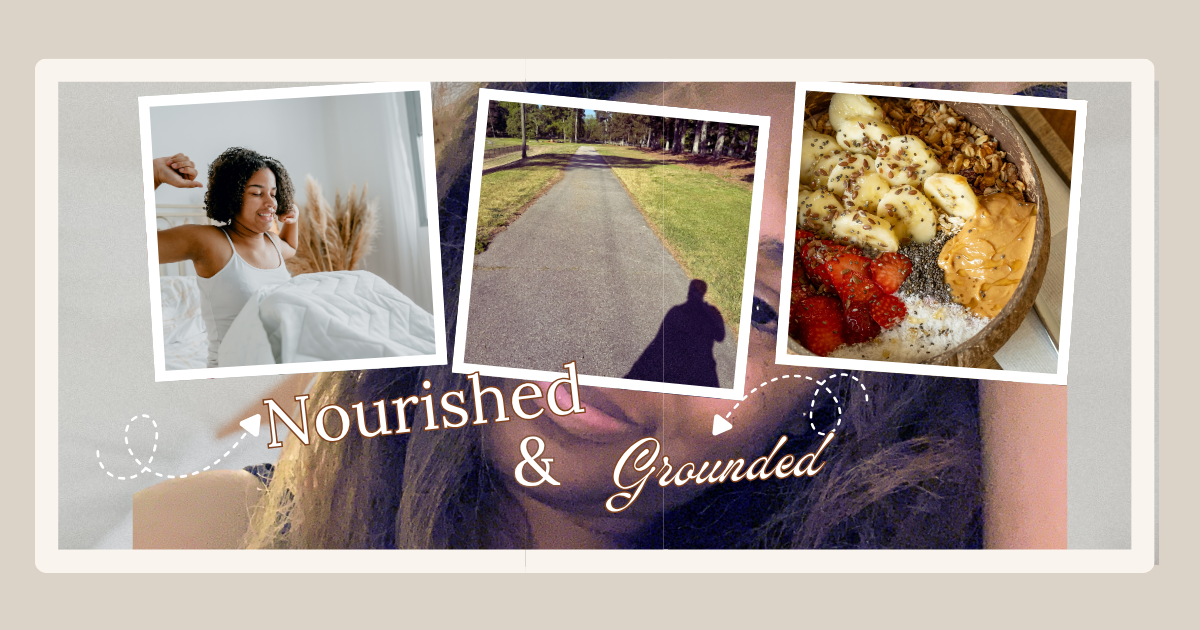
Self-care isn’t selfish or indulgent—it’s the conscious act of tending to your own physical, mental, and emotional needs. It’s about giving yourself what you actually require to feel nourished and grounded, rather than just surviving on autopilot.
For me, self-care means pausing long enough to listen—to my body, to my emotions, and to my thoughts—and doing the best I can with what I have at that moment. Sometimes that means resting, sometimes it means moving, and sometimes it’s as simple as acknowledging where I’ve been neglecting myself and making a plan to address it.
Listening to My Body: Healing from the Inside Out
This week, my focus is on gut health. My body has been protesting lately—I’ve been experiencing upset stomach, aches and pains, overall discomfort, fatigue, and restless sleep. I realized these are signs that I need to slow down and be gentler with myself, starting with what I eat.
Acknowledging My All-or-Nothing Patterns
I’ve always struggled to find balance with my nutrition. I tend to swing between extremes—either being overly strict or completely carefree and eating whatever feels right in the moment. Neither is sustainable nor healthy for me. Recently, I’ve been leaning towards convenience, opting for it due to my current situation. I get overwhelmed by the mere thought of preparing my meals in a shared space, so I often opt for DoorDash, completely neglecting my nutritional and financial well-being. Now, don’t get me wrong, depending on where you live, you may have access to a plethora of healthy options via food delivery apps, but that’s not necessarily the case where I live. Despite my behavior, I know how key nutrition is, and as I age, my body does not hesitate to tell me that I need to get it together. Since I am navigating my overstimulated reality, I am simply just making an effort to make things as simple as possible through small sustainable shifts, such as:
- Preparing simple, fresh meals that are easily digested (like homemade blender soups and smoothies).
- Taking time to sit and actually digest—both my food and my thoughts.
- Choosing ingredients that feel like fuel, not filler.
Simplifying My Approach to Nutrition
Simplifying my meals by focusing on blender soups and smoothies removes the daily stress of deciding what to eat and lightens the mental and financial load of meal prep. More importantly, it gives my digestive system the space to heal and rebalance.
Simplifying my meals isn’t a permanent choice—it’s what feels supportive right now. As my body begins to recover and find stability, I’ll gradually reintroduce more variety and move into the next phase of my healing journey.
Emotional and Mental Self-Care
Breaks are one of the most underrated forms of self-care. Whether it’s stepping away for a break at work or decompressing at home after a long day—these moments matter. It’s essential to make time throughout the day to decompress and reset, so you can continue to show up in a more grounded way. When you’re constantly surrounded by noise, movement, and demands, it affects everything—not just how you communicate or show up for yourself and others, but also how you receive. Overstimulation can make it harder to process what’s being said, to stay present, and receive support or information around you.
Soft Starts and Clear Minds: Preparing to Receive the Day
You can begin to ground yourself the moment you wake by sitting in silence for a few minutes, giving your body and mind a chance to acclimate before the day starts. Another gentle way to center yourself is by recording a quick voice memo as you get dressed or during your commute—a moment to release the mental and emotional chatter before the weight of your thoughts gets magnified by the weight of the world. Whether it’s reflections you didn’t unpack the day before, anxious planning for what’s ahead, or feelings that simply need to be voiced, speaking them aloud helps you start the day feeling lighter. It’s a simple act of release—one that clears mental space and allows you to meet your environment with more calm, clarity, and presence. They’re private, pressure-free. You can delete them or keep them to revisit later.
Stepping Away During the Workday
At work, taking a short break can make all the difference. When possible, I like to actually leave the building for 10-15 minutes—even if it’s just to sit in my car or take a walk nearby. It’s a small reset that gives my mind space to breathe. I’ve learned that putting a decent amount of space between myself and the building is essential to prevent others from encroaching on my sacred time. I’ve found that when you expect others to fully respect your downtime, you often end up disappointed or frustrated. So instead, I protect that time intentionally and plan for it, communicating when I’ll be stepping away so I can truly disconnect for a few moments.
Evening Decompression
At the end of the day, your reset ritual might look different each time, depending on what the day held. Maybe it’s a warm bath or shower, soft music or an audiobook while preparing dinner, or simply surrounding yourself with gentle sounds as you wind down—whatever helps you release the energy you’ve absorbed throughout the day.
On nights when your mind or eyes feel overstimulated from screens, try creating a sensory transition into rest. Dim the lights, slip on a heated eye mask, and listen to calming sounds—a sleep meditation, a bedtime story, or soft background noise from an app or sound machine. For some, quiet can make the mind wander, so these sounds become a soft focus—something to anchor you as you drift toward sleep. The goal isn’t silence (unless that’s your thing), but softness—a slow unwinding that eases your body and mind into rest.
Boundaries
Finally, if someone asks for your time or energy after you’ve already given all you can, remember: it’s okay to say no. Setting that boundary isn’t selfish; it’s self-aware. You might offer an alternative if you feel called to, saying, “I can’t do it today, but maybe another time.” Honoring your limits is one of the most authentic forms of self-care.
Movement as Self-Care
Self-care isn’t always stillness. Sometimes it’s movement—releasing the day’s tension through your body, one breath at a time. Movement doesn’t have to look the same for everyone. For some, it’s an early-morning jog or a sweaty HIIT session; for others, it’s an evening walk, gentle stretching, or slow yoga before bed.
What matters most is meeting your body where it is. For those navigating injuries or limitations, movement might look different than it once did—and that’s okay. It’s not about performing perfectly; it’s about reconnecting, listening, and allowing your body to release what it’s been holding.
Practical Self-Care on a Budget
Self-care doesn’t have to come with a price tag. Yes, massages and spa days are incredible luxuries—but nurturing moments at home can be just as restorative.
Some of my favorite ways to unwind include simple rituals like a self-manicure or pedicure, soaking in Epsom salt and essential oils, or spending time gently stretching and foam rolling. I also enjoy using what I already have at home—everyday ingredients that become part of my personal routine, intuitive and unique to what I need in the moment. There’s something magical about becoming your own apothecary—experimenting with what you have, setting pure intentions, and creating from a place of love and quiet trust in the care you’re giving yourself.
It’s not about perfection or products; it’s about presence—and finding peace in the simple things that remind you you’re cared for.
These small acts are, at their core, expressions of love—a kind of inner stewardship that says, I see you, I notice what’s been neglected, and I’m here to make space for your restoration. It’s the decision to pour time and energy back into yourself, to honor what you deserve.
Accessible Comforts and Tools
Every now and then, I’ll take advantage of small comforts wherever I can find them. For example, some of my relatives have massage chairs, and I’m sure to use them when I visit! I also use a foot massager at home that I purchased with my HSA card—something many people don’t realize they can use for eligible self-care items. Many body massagers and wellness tools are HSA-eligible and available through sites like Amazon.
DIY Rituals and Inspiration
Don’t underestimate the small things. The routines that seem ordinary can become moments of care when you approach them with intention. Dry brushing before a shower or massaging your scalp while watching a show—these small acts can shift how you feel in your body.
Sometimes self-care is as simple as applying a fresh coat of polish, filing your nails, or massaging your hands as you apply lotion. It doesn’t have to be elaborate or time-consuming—just something that helps you feel refreshed, cared for, or a little more put-together.
If you’re ever unsure where to start, there’s plenty of inspiration online. There are tutorials and ideas to help you create small moments of restoration right where you are. The key is simply making space for yourself, even in brief, intentional ways.
Financial Self-Care
I’ve come to realize that financial responsibility is a form of self-care. Managing my spending and holding myself accountable for my habits all directly affect how much peace I feel daily. When I handle my finances intentionally, it’s not just about managing money—it’s about managing my sense of safety and stability.
I’m still learning. There are moments when I want to lean into convenience, even when I know it can be costly. But I’m learning to pause, make mindful choices, and give myself grace when I fall short. Again, the goal isn’t perfection—it’s awareness.
By acknowledging where my habits could use improvement and staying consistent in my efforts, I’m not just taking care of my finances; I’m taking care of my future self. Every small, responsible decision adds up to greater stability, increased confidence, and ultimately, greater peace.
If you’d like to explore how financial stability ties into emotional peace, I shared more about that in Freedom in Focus: My Reflections on The Psychology of Money.
Creating a New Reality Through Care
Ultimately, self-care is about becoming the curator of my own life. I’m learning to make space for the version of myself I want to become—someone who feels nourished, at peace, and aligned.
For me, alignment means setting aside time not just for healing, but for exploring new opportunities—new careers, hobbies, environments, and ways of being that support a gentler rhythm of life. I often picture the life I want to live and the person I want to be, then ask myself: What would it take to embody that vision?
Learning, Growing, and Releasing
This process involves learning, growing, reflecting, and releasing anything that no longer supports who I’m becoming—whether it’s an old belief, habit, or pattern that once fit but no longer does. As we grow, our beliefs evolve. That’s part of the process. There’s no shame in what we once believed; those earlier versions of ourselves were operating off the knowledge we had at that time.
So I’m learning to be gentle—to forgive, to accept, and to love every past version of myself. I’m releasing thought loops that keep me stuck, reflecting without clinging to the past, and using those lessons as stepping stones to move forward.
Showing Up for Myself
Being the curator of your life means taking responsibility for your journey. While support and community are essential, the path forward ultimately requires me to show up for myself. It requires courage to voice what I want, to stand firm in moments when I’m misunderstood or unsupported, and to keep moving toward the life that feels true to me.
Self-care, at its core, is showing up for yourself—consistently, intentionally, and lovingly. It’s the daily actions that contribute to creating the life you wish to live.
Your Turn: What Does Self-Care Look Like for You?
Self-care looks different for everyone, and there’s no single “right” way to do it. For some, it might mean slowing down, saying no, taking a quiet walk, or finally booking that appointment you’ve been putting off. For others, it could mean cooking a nourishing meal, cleaning your space, or simply taking a few deep breaths between responsibilities.
I’d love to hear from you—what does self-care look like for you at this moment? How do you refill your cup, whether physically, emotionally, mentally, or financially?
Redefining What Care Looks Like
I’ve seen so many creative and beautiful ways people care for themselves at home—people finding ways to meet their own needs without relying entirely on external help. And while it’s terrific to have a care team—a trusted stylist, a nail tech, a massage therapist—it’s also perfectly okay to be your own caretaker for a while. Sometimes, doing things yourself brings a different kind of satisfaction and control. At other times, it’s about giving yourself permission to relax and let someone else take care of you.
Embracing What’s Possible Right Now
For me, self-care in this season means finding peace within my current reality and learning to work with what I have. I’m in a preparatory phase—one where I’m becoming more intentional about how I spend, save, and sustain myself so I can create space for what’s next. This shift has encouraged me to redefine what care looks like—to nurture myself in ways that feel personal, mindful, and aligned.
I’m grateful to have the ability to do many things on my own. When something doesn’t turn out perfectly, I remind myself that effort born from love is never a loss. I’m endlessly inspired by others who share creative, accessible ways to care for themselves—reminders that self-care doesn’t have to be elaborate or expensive to be deeply nourishing.
Join the Conversation
What does self-care look like for you right now? How are you loving yourself—mentally, physically, emotionally, or financially? Whatever it is, I’d love to hear about it in the comments. Let’s inspire each other to care for ourselves in real, sustainable ways.